Scientific Plant Services
It’s never been easier to have a beautiful lawn. Call today to lock in your savings and get two FREE applications. But time is running out!
Monday - Friday: 8:30am to 5:30pm EST
Saturday: 9:00am to 2:00pm EST
Opt into our text messaging platform to begin your program and schedule with us today!
Pruning is defined as a horticultural practice that alters the shape and growth of a plant. The plant could be an azalea or a 100 foot tall White Oak. Proper pruning of shrubs and trees goes hand in hand with proper nutrition. Proper pruning early on in a plant’s life can possibly prevent structural problems in later years. In this sense, pruning can be considered Preventive Maintenance
There are various times of the year when it is appropriate to prune certain plants and trees. I always tell my clients that there is not an inappropriate time of year to remove any deadwood from trees and shrubs. The same would apply for the removal of diseased limbs and potential safety hazards.
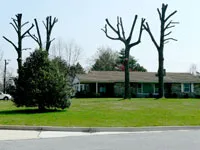
However, there are suggested times of year for certain pruning to minimize damage to your trees and shrubs. For deciduous trees and shrubs, it is recommended to do pruning before bud break or new growth is initiated in late winter or early spring. For spring blooming plants, such as azaleas or rhododendrons, you must prune immediately after blooming in late spring or early summer. This is done to prevent removal the of the following year’s flowers. Other flowering shrubs, that are planted more for their foliage than flowering, such as barberry or burning bush, should be pruned in early spring. There is a running controversy regarding pruning of Crape Myrtle as to the best time to prune. According to the Virginia Cooperative Extension Service, late winter/early spring is correct. Late summer or early fall may cause new growth that could be damaged by early frost. And don’t commit Crape Murder ! This is the unnecessary Topping of these gorgeous plants. (More on Topping later)
Pruning for Safety Removal of dead or damaged limbs from trees reduces the risk of death or injury to humans and pets as well as the risk of damage to homes and vehicles.
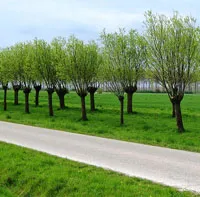
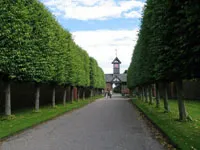
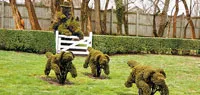
Pruning for Appearance In addition to specialized pruning such as Topiary, Bonsai, and Pollarding, it is recommended that trees have timely removal of suckers, water sprouts, and unwanted branches that would otherwise decrease a tree’s desirable appearance. Pruning is also suggested to manage the size of plants and to keep evergreens well shaped.
Pruning to Promote Healthy Plants Shrubs and trees can be affected by external forces such as storms, animal rubbing, previous improper pruning, disease, or insects. Removal of damaged portions of trees and shrubs due to these factors, or of branches that cross and rub will help reduce further damage to the plant. According to Dr. P.P. Pirone, pruning can be useful as a control measure for tree diseases: Fire Blight, Black Knot, some Twig Blights and Cankers. It can also be useful in managing Dutch Elm Disease and Crown Gall.
Pruning for Maintenance In this instance, pruning can be effective to promote flower and fruit development, as well as preservation of hedges. The previously mentioned Tree Forms of Pollarding, Bonsai and Topiary are included here as well.There are specialized pruning recommendations for certain situations. Regarding tree evergreens, these seldom need pruning. Nevertheless, one must be careful as to timing should you wish to trim these trees. With Pines, it’s okay to remove as much as 2/3 of the new growth (candles), but prune before the candles become mature. It is suggested not to remove more than the growth from the previous year. As to Spruce, Douglas Fir and Fir, late winter/early spring is best. These trees will grow laterally if properly pruned at any time of the year. Slower growing evergreens such as hemlock, arborvitae, yew and juniper may be trimmed through the middle of summer.
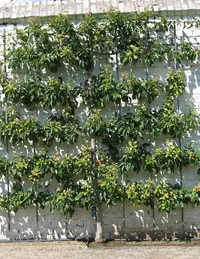
Espalier as previously explained involves forming plants into formal shaped against a flat surface, Typical plants used for this purpose include: cotoneaster, juniper, privet, photinia, pyracantha and viburnum.